
Articles
10 Proven SEO Strategies to Improve Your Website Rankings
07 Oct 2026

Share article
In today's competitive digital landscape, having a website is only the first step. If potential customers cannot find your website through search engines, it becomes much harder to attract consistent organic traffic.
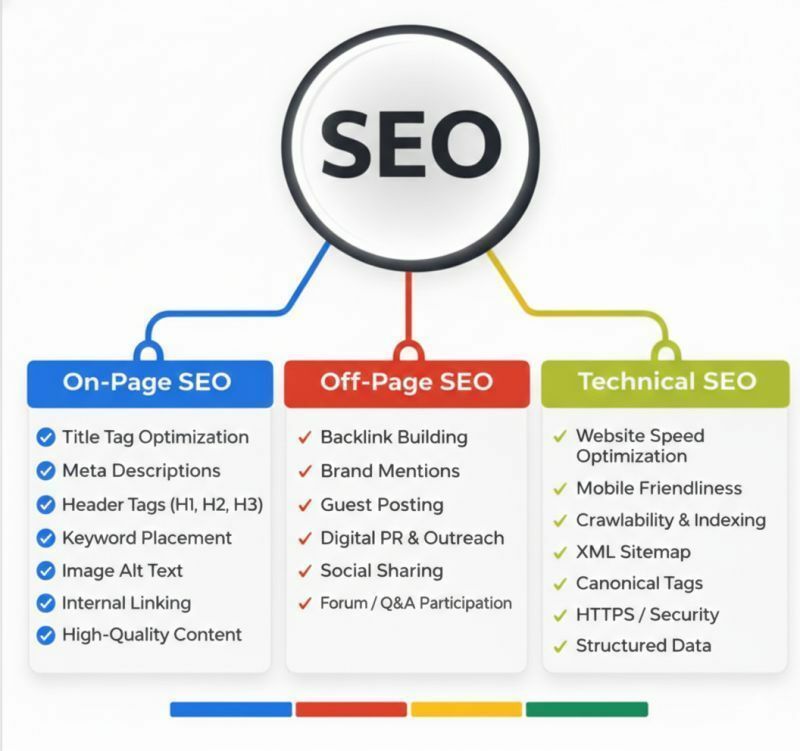
Search engine optimization (SEO) helps businesses improve their visibility, reach the right audience, and build long-term online growth. It requires a combination of quality content, technical improvements, user experience, and authority-building strategies.
Here are 10 practical SEO strategies that can help improve your website rankings.
1. Conduct Proper Keyword Research Focus on keywords relevant to your products or services. Along with high-volume keywords, consider long-tail keywords because they attract users with stronger search intent.
2. Create High-Quality, Helpful Content Create articles, guides, and resources that answer real questions from your audience. Good content should answer questions clearly, provide accurate information, and be easy to read.
3. Optimize Your On-Page SEO Important elements include your page title, headings, URL, meta description, and image alt text. Avoid keyword stuffing — keywords should appear naturally where they make sense.
4. Improve Website Speed Compress large images, remove unnecessary plugins, use browser caching, and use a reliable hosting provider. A faster website provides a better experience for visitors.
5. Make Your Website Mobile-Friendly A large percentage of users access websites through smartphones. Check that menus, buttons, images, and text are easy to use on mobile devices.
6. Build Relevant Backlinks Focus on earning relevant mentions from websites related to your industry. Guest contributions, digital PR, and original research can all help attract valuable backlinks.
7. Strengthen Internal Linking Internal links help visitors discover related content and help search engines understand your website structure. Use descriptive anchor text when adding internal links.
8. Improve User Experience Focus on clear navigation, readable fonts, simple layouts, and fast loading times. A positive user experience makes it easier for visitors to interact with your business.
9. Keep Your Content Updated Review important content regularly and update statistics, examples, and links when necessary. Updating older content can make it more useful for your audience.
10. Monitor Your SEO Performance Track metrics such as organic traffic, keyword rankings, click-through rates, and backlinks. Use tools like Google Search Console to refine your strategy.
Final Thoughts Improving website rankings is a long-term process. Start by understanding what your audience searches for, create helpful content, make your website fast and mobile-friendly, and build relevant authority over time.



Advertisement

