
Articles
Infrastructure-Synced Township Living in East Bangalore: A Planning Perspective on Abhee Codename New Dimension
20 Feb 2026
Share article
East Bangalore has evolved from a technology-driven employment corridor into one of the city’s fastest-growing residential zones. With continuous population inflow across Whitefield, Varthur, and Sarjapur Road, residential demand is no longer limited to standalone apartment complexes. Homebuyers and investors are increasingly prioritizing integrated township developments that align with long-term infrastructure growth and lifestyle convenience.
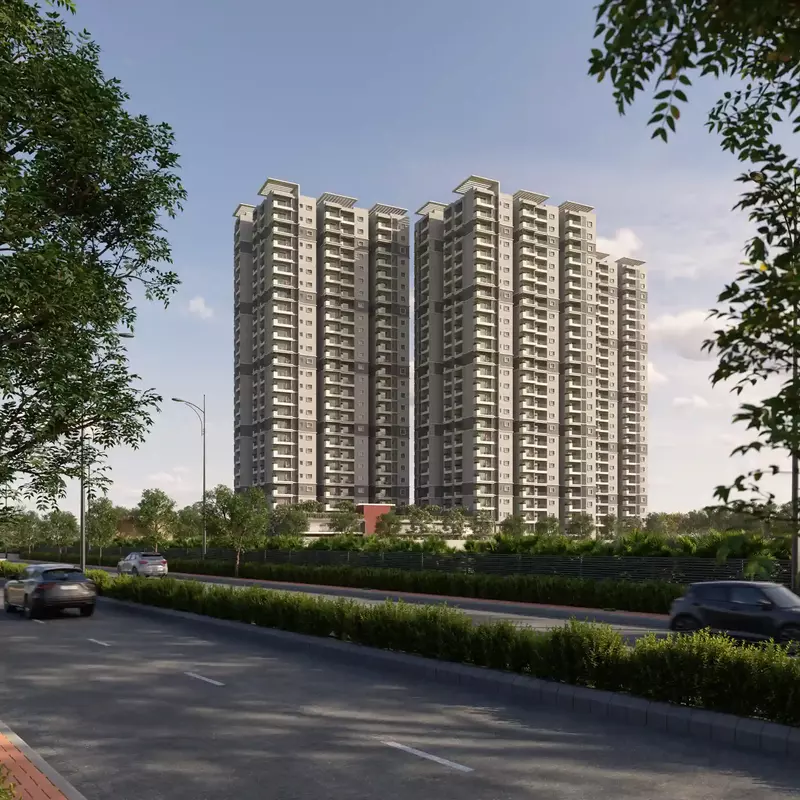
This shift has led to the emergence of infrastructure-synced residential planning, an approach that integrates housing layouts with mobility networks, environmental sustainability, and internal social infrastructure. Projects such as Abhee Codename New Dimension, introduced as Abhee Celestial City Phase 2, reflect this transition toward master-planned township ecosystems in East Bangalore. Developed by Abhee Ventures, the project aligns residential living with emerging connectivity corridors and employment hubs.
Infrastructure-synced township developments are typically positioned within zones that benefit from expanding metro rail networks, arterial road upgrades, and proposed infrastructure initiatives such as the Peripheral Ring Road (PRR). This planning alignment enables residential communities to maintain accessibility and functional stability even as surrounding urban density increases.
A defining characteristic of integrated townships such as Abhee Codename New Dimension is phased development. In this model, residential units and infrastructure are introduced progressively to support balanced population inflow and efficient utility management. This approach helps maintain livability standards while allowing community ecosystems to evolve over time.
Township environments also address a common challenge in rapidly developing suburbs, dependency on external civic amenities. Projects such as Abhee Celestial City Phase 2 are typically designed to internalize lifestyle infrastructure through planning provisions for clubhouses, landscaped community spaces, indoor recreation zones, children’s play areas, and multipurpose sports courts.
Environmental sustainability is another critical component of infrastructure-aligned residential planning. Integrated township developments often incorporate rainwater harvesting systems, tree-lined internal avenues, landscaped green zones, and pedestrian-friendly pathways.
Modern township planning also emphasizes walkability and internal mobility. Developments such as Abhee Codename New Dimension may include jogging tracks, cycling zones, and activity corridors designed to reduce vehicle dependency while enhancing accessibility for residents.
From an investment perspective, township-based developments have historically demonstrated greater resilience in rental occupancy and resale performance compared to standalone apartment complexes. Projects such as Abhee Celestial City Phase 2 benefit from planned density distribution, infrastructure continuity & phased residential introduction, attributes that may support demand stability and long-term capital value retention.
As Bangalore continues expanding toward its eastern peripheries, integrated township ecosystems are expected to play a defining role in shaping next-generation residential clusters. In this context, Abhee Codename New Dimension, introduced as Abhee Celestial City Phase 2, represents a planning-led residential model aligned with sustainability frameworks and evolving urban growth patterns in East Bangalore.
Article tags
abhee celestial city phase 2
abhee codename new dimension
abhee ventures
bangalore real estate
abhee projects
Advertisement


Advertisement
